
What Is a Split Level Home?
A split level home is a type of house where the floors are arranged across staggered levels connected by short flights of stairs, rather than traditional full storeys stacked directly on top of one another.
Instead of having a single ground floor and upper floor, a split level home is divided into a series of half-levels that step up or down through the house. Each level is typically designed for a different purpose, such as living areas, bedrooms, home offices or utility spaces.
Split level homes are particularly well suited to the Northern Beaches, where many properties are built on sloping or uneven blocks. By following the natural contours of the land, a split level design can reduce excavation requirements, maximise views, improve natural light and create a more seamless connection between indoor and outdoor living areas.
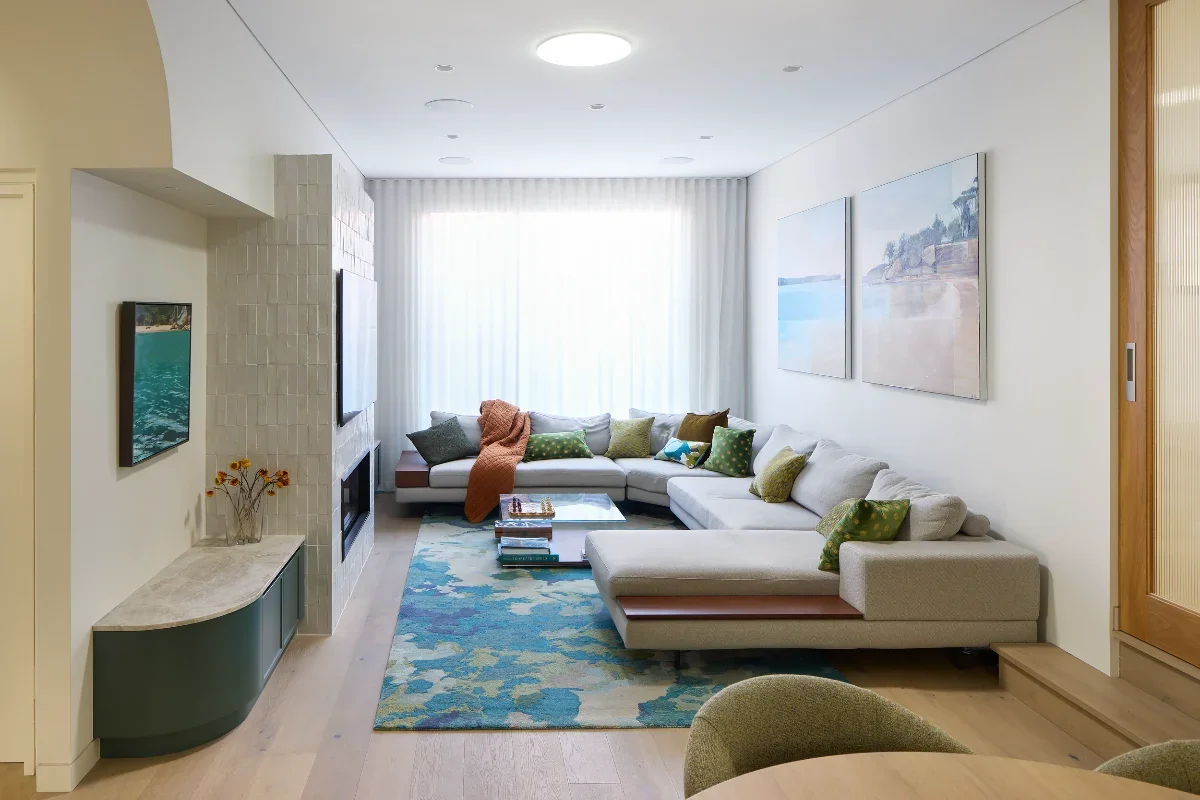
Quick Summary: What Defines a Split Level Home
Floors arranged across staggered half-levels
Short staircases connecting each level
Designed to work well on sloping blocks
Separate zones for living, sleeping and utility areas
Often feature interesting architectural forms
Maximise views, natural light and site potential
How a Split Level Home Layout Works
The defining feature of a split level home is the way the internal layout steps up or down across multiple levels.
In many designs, the front door opens onto a small entry landing positioned between two levels. From this point, stairs lead either up to the main living areas or down to additional spaces such as a garage or secondary living room.
A typical layout might include:
Lower level
Garage, storage, laundry or a rumpus room.
Mid level
Kitchen, dining and main living spaces.
Upper level
Bedrooms and bathrooms.
Some larger homes include additional levels for studies, guest areas or media rooms. This staggered layout helps separate different parts of the home while maintaining a connected overall design.
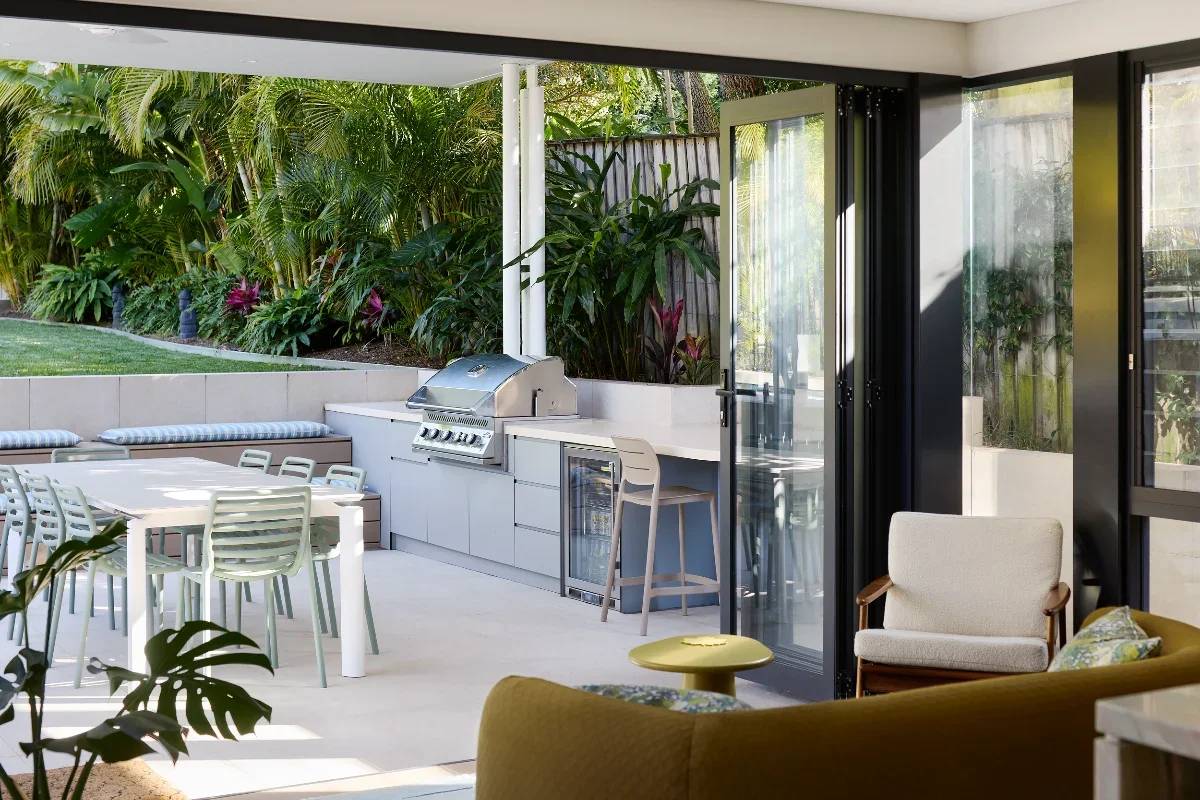
Why Split Level Homes Are Ideal for Sloping Blocks on the Northern Beaches
One of the main reasons split level homes are so popular on the Northern Beaches is their ability to adapt to sloping and challenging sites.
Rather than relying on extensive excavation and large retaining walls to create a flat building platform, a split level design allows the home to follow the natural contours of the land. This can reduce site works, minimise disruption to the block and create a more efficient use of space.
For many Northern Beaches properties, particularly those with steep gradients or elevated positions, a split level home can also help maximise natural light, capture views and create a stronger connection between indoor and outdoor living areas.
Benefits of building a split level home on a sloping block include:
Reduced excavation and site works
Better integration with the landscape
Opportunities to capture views
Improved natural light and ventilation
In areas with elevated or irregular blocks, such as many parts of Sydney’s Northern Beaches, split level homes can provide a practical solution that also enhances the architectural design of the property.
Types of Split Level Homes
Split level homes can be designed in several different configurations depending on the site and the size of the home.
Bi-Level (Split Foyer)
A bi-level home has two main levels connected by a central entry landing. From the front door, stairs lead either up to the living areas or down to a lower level that may include additional rooms or a garage.
Tri-Level
A tri-level home includes three staggered levels and is one of the most common split level designs. The layout usually separates living spaces, bedrooms and service areas across different levels.
Quad-Level
Larger homes may include four levels. These designs often add an additional level for recreation spaces, home offices or guest accommodation.
Benefits of Split Level Homes
Split level homes offer several advantages compared with traditional single-storey or double-storey layouts.
Natural Separation of Living Spaces
Different levels create clear zones between areas of the home. This allows busy family spaces such as kitchens and living rooms to be separated from quieter bedroom areas.
Better Use of the Block
Split level homes can make better use of uneven land by following the natural slope rather than forcing the site to be completely level.
More Architectural Interest
Because the layout steps across levels, split level homes often have more visually interesting interiors and exterior forms compared with conventional house designs.
Improved Light and Views
The staggered design can allow windows to be positioned at different heights and orientations, helping maximise natural light and capture views from elevated parts of the home.
Are Split Level Homes Right for Your Property?
Split level homes are often an excellent solution for properties across the Northern Beaches, particularly those with sloping terrain, elevated positions or challenging site conditions.
When designed well, a split level home can transform a difficult block into a unique architectural opportunity. Rather than working against the natural landscape, the design works with it, creating functional living spaces that maximise views, natural light and the usable area of the site.
However, a successful split level home requires careful planning and thoughtful design. The relationship between each level, the flow of the floorplan and the practical needs of everyday living all need to be considered from the outset. Working with an experienced builder and designer can help ensure the finished home feels connected, functional and tailored to both the site and your lifestyle.
Building a Split Level Home
Designing a split level home requires careful consideration of the block, the slope of the land and how each level connects with the next. When done well, the result is a home that feels spacious, functional and well integrated with its surroundings.
At JTB Building, we work closely with homeowners and architects to deliver high-quality residential builds across Sydney’s Northern Beaches. Many blocks in this region feature elevation changes, making split level homes an ideal design approach.
If you’re planning a renovation, extension or new home on a sloping block, our team can help guide you through the construction process and deliver a home that makes the most of your site.
FAQs
What is the difference between a split level home and a two-storey home?
A two-storey home has full floors stacked directly on top of each other. A split level home uses staggered half-levels connected by short staircases.
Are split level homes good for sloping blocks?
Yes. Split level homes are often designed specifically for sloping blocks because they allow the house to follow the natural terrain.
Do split level homes have more stairs?
Yes. Because the floors are staggered, split level homes typically include several shorter staircases between levels.
Are split level homes more expensive to build?
Costs vary depending on the site and design. On steep blocks, a split level design can sometimes reduce excavation costs compared with flattening the site.
Are split level homes popular in Australia?
Yes. They are especially common in areas with uneven terrain where traditional flat-site homes may be difficult to build.
Why are split level homes popular on the Northern Beaches?
Many Northern Beaches properties are built on sloping blocks. Split level homes work with the natural contours of the land, helping maximise views, natural light and usable space while reducing the need for extensive excavation and retaining walls.